Veneers in Bangkok: the ideal fix for a perfect smile? Everything you need to know about treatment, costs, and how prices compare to the US, UK, and Australia.
A bright, even smile matters to a lot of people. But not everyone’s natural teeth quite match what they picture.
That’s where veneers come in, wafer-thin shells that can give teeth a flawless look.
So what exactly are veneers, when do they make sense, what do they cost in Bangkok compared to the US, UK, and Australia, and what are the pros and cons? This article covers everything you need to know about veneers.
Veneers are probably the treatment where the price gap with Bangkok is most obvious, especially if you’re doing several teeth at once.
That’s exactly why extra caution matters here too: the treatment is irreversible, and a spur-of-the-moment “let’s just do it on day two of the trip” is rarely a good idea. Take the time for a proper consultation before you commit.
At a Glance
What exactly are veneers?
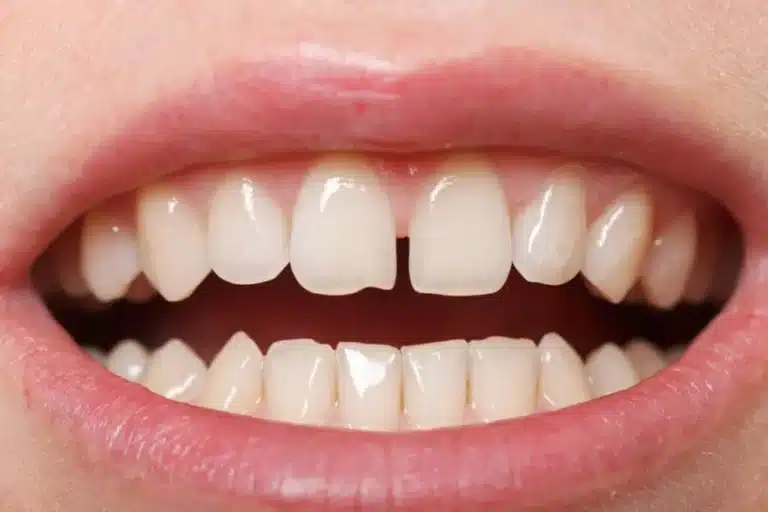
Veneers are thin, custom-made shells of ceramic or composite that are bonded to the front of your teeth to improve their look.
They’re custom-fitted to the shape, size, and color of your teeth, then permanently bonded in place.
Veneers are designed to look natural while helping to mask small flaws like discoloration, wear, or minor misalignment.
When do veneers make sense?
Veneers are usually used for cosmetic reasons. Some typical situations include:
- Discoloration: When teeth are badly stained and whitening no longer helps, veneers can restore or even improve on the natural tooth color.
- Wear and chips: For worn-down or chipped teeth, veneers can restore the original shape and structure.
- Minor misalignment: Slight misalignment or gaps between teeth can be cosmetically corrected with veneers, without needing full orthodontic treatment.
- Uneven tooth shapes: When teeth are different sizes or shaped unevenly, veneers can create a more harmonious row of teeth.
- Enamel defects: For congenital or acquired enamel defects, veneers can protect the affected tooth while improving its appearance.

What types of veneers are there?
There are two main types of veneers:
- Ceramic veneers (porcelain veneers): Made from high-quality ceramic, these veneers stand out for how natural and durable they are. Ceramic veneers resist staining well and can mimic the translucency of natural tooth enamel, giving a very realistic result. This category includes options like E.max or zirconia veneers, which are also widely used at Bangkok clinics.
- Composite veneers: Made from a tooth-colored resin (composite) and applied directly to the tooth. They’re cheaper than ceramic veneers, but also less durable and more prone to staining.
How does veneer treatment work?
Fitting veneers happens in several steps:
- Consultation and planning: First, you’ll have a consultation with your dentist to discuss what you want and what’s realistic. This is also where exact costs and the treatment timeline get worked out.
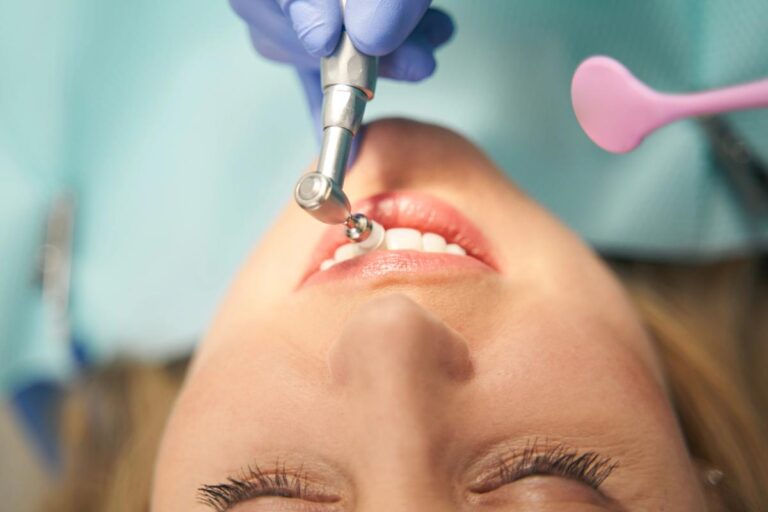
- Preparing the teeth: Next, the teeth are prepared. For ceramic veneers, a thin layer (about 0.3 to 0.7 mm) of enamel is usually removed to make room for the veneer. With no-prep veneers, a specific type of veneer, no grinding is needed at all.
- Taking an impression: Once the teeth are prepped, an impression is taken as the basis for making the veneers. In some cases, this is done digitally instead.
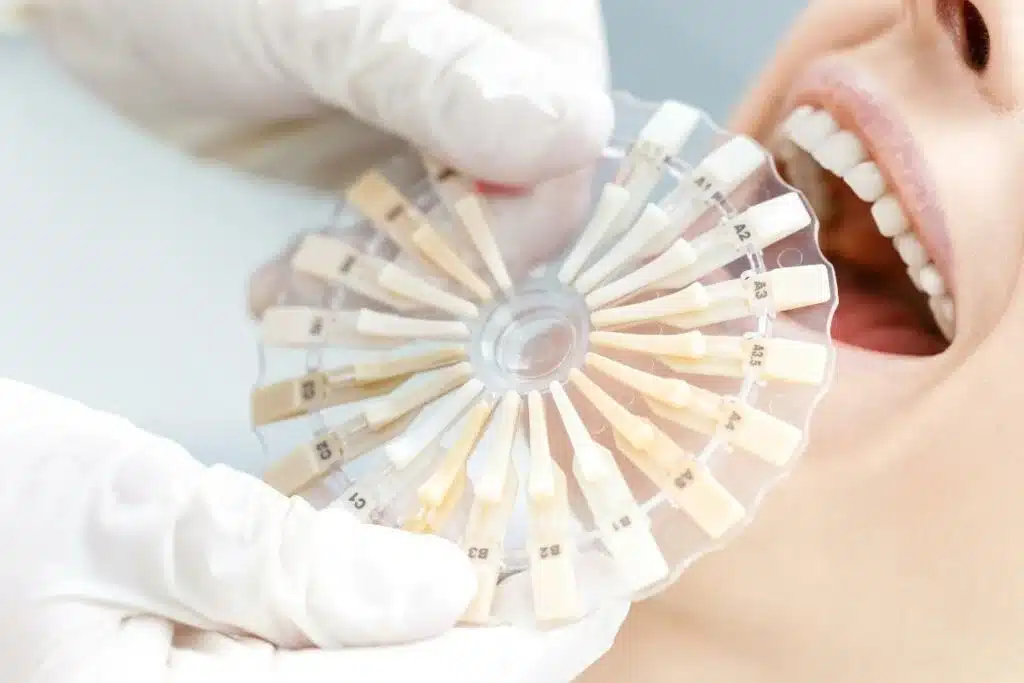
- Fitting and bonding: Once the veneers are ready, they’re placed on the teeth to check fit and color. If everything looks right, the veneers are permanently bonded with a special adhesive and cured with a light.
- Fine-tuning: After the veneers are bonded, your bite is checked and the surface may be lightly adjusted to make sure everything fits perfectly.
Composite veneers are often shaped directly on the tooth and finished in a single visit, while ceramic veneers go through a dental lab and usually need a few days between the impression and the fitting.
How much do veneers cost?
The cost of veneers varies a lot and depends on the material used, how many teeth you’re doing, and the clinic.
Back home, a single porcelain veneer typically runs $1,200 to $2,500 in the US, £500 to £2,000 in the UK, and A$1,200 to A$2,500 in Australia.
Composite veneers are cheaper, usually $900 to $1,500 per tooth in the US, £150 to £400 in the UK, and A$300 to A$800 in Australia. If you’re doing several teeth, the total adds up accordingly, and since veneers are cosmetic, the NHS in the UK doesn’t fund them and Medicare doesn’t cover them in Australia either.
Price comparison: veneers in Bangkok vs. the US, UK, and Australia
For a rough sense of the numbers (as of August 2026, currency conversions approximate), prices per tooth:
| Type of veneer | United States | United Kingdom | Australia | Bangkok |
|---|---|---|---|---|
| Composite veneer | $900 to $1,500 | £150 to £400 | A$300 to A$800 | 6,000 to 9,000 THB (about $175 to $260) |
| Ceramic / porcelain veneer | $1,200 to $2,500 | £500 to £2,000 | A$1,200 to A$2,500 | 12,000 to 30,000 THB (about $350 to $870) |
| Premium (E.max, zirconia, Lumineers) | often at or above the top of the porcelain range | often at or above the top of the porcelain range | often at or above the top of the porcelain range | roughly 15,000 to 50,000 THB (about $435 to $1,450), depending on material |
These are rough benchmarks from publicly available pricing, not firm quotes. With veneers especially, the comparison tends to matter most when you’re doing several teeth at once, since the savings multiply per tooth. The actual price depends on the material, the number of teeth, and the clinic, and is only confirmed after an in-person exam.
Who pays for veneers?
Veneers are usually classed as a cosmetic treatment, so public and national health systems generally don’t cover the cost, whether that’s the NHS in the UK or Medicare in Australia.
There are exceptions when veneers are medically necessary, for example to treat enamel defects.
In those cases, some coverage may be available depending on your situation. Private dental insurance and extras cover can also pick up part of the cost depending on your policy, it’s worth checking specifically whether treatment abroad is included before you book.

Well-known clinics for veneers in Bangkok
Bangkok International Dental Center (BIDC) is JCI-accredited and offers veneers alongside the related pre- and aftercare, like X-rays and cleanings, all under one roof.
Thantakit Dental Center specializes in international patients and offers both composite and ceramic veneers.
Bangkok is also home to several clinics that focus specifically on cosmetic dentistry and “smile design,” with correspondingly deep experience in veneers specifically.
These mentions are for general information only and aren’t a medical recommendation; they don’t replace an individual consultation or your own comparison of several clinics. Bangkok Insiders has no commercial relationship with the clinics named, unless stated otherwise.
Practical tips for your veneer treatment in Bangkok
Because the treatment is irreversible, get at least one, ideally two, no-obligation consultations before your trip, ideally with a digital smile design or mock-up so you can see roughly what the result will look like beforehand. Composite veneers often only need a single day, but for ceramic veneers, plan on at least a week between the impression and the final fitting because of lab turnaround. Ask about the exact material used, whether there’s a written warranty, and what happens if a veneer chips or doesn’t fit properly after you’re back home. And don’t let a steep “holiday discount” push you into a snap decision, a reputable clinic will always give you time to think it over.
Pros and cons of veneers
Pros of veneers:
- Aesthetics: Veneers offer an excellent cosmetic fix for a range of dental issues. They can improve the shape, color, and alignment of teeth, adding up to a great-looking smile.
- Gentle preparation: Compared to crowns, prepping teeth for veneers is minimally invasive, since only a small amount of enamel needs to be removed.
- Durability: Ceramic veneers in particular are very durable and resistant to staining. With good care, they can last 10 to 15 years or longer.
- Natural look: Ceramic veneers are translucent and mimic the natural quality of tooth enamel, giving a very realistic look.
Cons of veneers:
- Cost: Veneers are a relatively expensive treatment, especially when several teeth are involved.
- Irreversibility: Since fitting veneers usually involves removing a thin layer of enamel, the treatment can’t be undone. Once you have veneers, the affected teeth will always need veneers or some other form of coverage going forward.
- Sensitivity: Some patients notice increased sensitivity to hot or cold food and drinks after treatment, especially with ceramic veneers.
- Risk of breaking: Although veneers are sturdy, excessive stress, like teeth grinding, can cause them to crack or chip. In those cases, they need to be repaired or replaced.
The bottom line: when are veneers in Bangkok the right choice?
Veneers are worth considering for anyone unhappy with the look of their teeth who wants a picture-perfect smile.
They’re especially well suited to people looking to correct minor misalignment, discoloration, or worn teeth without going through full orthodontic treatment.
The decision to get veneers should be well thought through and made in consultation with your dentist, so you land on the best option for your specific situation. In Bangkok, the savings can be substantial, especially across multiple teeth, but that should never be the only reason for the decision.
With good care and regular dental visits, veneers can keep a bright smile looking great for many years.
FAQs about veneers in Bangkok
Here are answers to some of the questions we get asked most often about veneers in Bangkok.
What are veneers and what are they used for?
Veneers are thin, custom-made shells of ceramic or composite bonded to the front of your teeth. They’re used to improve the look of your teeth by correcting discoloration, wear, minor misalignment, or gaps.
How long do veneers last?
Veneers, especially ceramic ones, are very durable. With good care and regular dental visits, they can last 10 to 15 years or even longer. Composite veneers have a shorter lifespan, usually 5 to 7 years.
What do veneers cost in Bangkok?
A composite veneer usually costs 6,000 to 9,000 THB (roughly $175 to $260 / £135 to £200 / A$260 to A$390) per tooth. A ceramic or porcelain veneer runs about 12,000 to 30,000 THB (roughly $350 to $870 / £267 to £667 / A$520 to A$1,305) per tooth, with premium materials like E.max or zirconia sometimes higher. For comparison, composite veneers usually cost $900 to $1,500 in the US, £150 to £400 in the UK, and A$300 to A$800 in Australia, while porcelain veneers run $1,200 to $2,500 in the US, £500 to £2,000 in the UK, and A$1,200 to A$2,500 in Australia. You’ll only get a firm quote after an in-person exam.
Who pays for veneers?
Since veneers are usually done for cosmetic reasons, national health systems like the NHS or Medicare typically don’t cover the cost. Private dental insurance and extras cover can pick up part of the cost depending on your policy, especially if the veneers are medically necessary.
How does veneer treatment work?
Treatment starts with a consultation and planning session, followed by preparing the teeth, which involves removing a thin layer of enamel. An impression is then taken and the veneers are custom-made. Once ready, the veneers are bonded onto the teeth and permanently fixed in place.
Are veneers painful?
Fitting veneers is generally not painful, since preparing the tooth is minimally invasive. Where enamel is removed, it’s done under local anesthesia so you won’t feel pain. Some brief sensitivity afterward is possible but usually fades quickly.
Can veneers stain or break?
Ceramic veneers are very stain-resistant thanks to their smooth, non-porous surface. Composite veneers, on the other hand, can become more prone to staining over time. Both types can crack or chip under heavy stress, like teeth grinding or biting down on hard objects.
Is veneer treatment reversible?
Since fitting veneers usually involves removing a thin layer of enamel, the treatment is irreversible. That means the affected teeth will always need some form of covering, whether veneers or another dental solution. That’s exactly why it’s worth getting a thorough consultation before your Bangkok trip, rather than making a spontaneous decision.
Can all teeth get veneers?
Veneers work especially well on front teeth, since they’re mainly a cosmetic fix. They can be used on almost anyone as long as the teeth are healthy and don’t have extensive structural damage. For badly damaged teeth, a crown may be a better option.
How do I care for my teeth after getting veneers?
Caring for teeth with veneers is barely different from normal oral care. Regular brushing, flossing, and dental checkups are key to keeping both the veneers and the teeth underneath healthy. Avoid biting hard objects and try to prevent teeth grinding to get the most out of your veneers.
How many days should I plan for veneers in Bangkok?
For composite veneers alone, a single appointment is often enough, since they’re shaped directly on the tooth. For ceramic veneers, plan on at least a week between the impression and the fitting because of lab turnaround, plus time for an unrushed consultation beforehand.
Note: This article is for general information only and doesn’t replace a personal dental consultation or exam. The clinics mentioned are named for general information, not as a medical recommendation, and Bangkok Insiders has no commercial relationship with them unless stated otherwise. Prices, procedures, and accreditations can change, so confirm everything directly with the clinic before any treatment, and consider getting a second professional opinion if needed.

- About the Author
- Latest Posts

Tim Kroeger is a luxury wellness travel specialist, founder of Universal Traveller, and creator of The Restorative Index, a performance-based framework for evaluating wellness hotels. After 15+ years across 110+ countries, he shifted from destination-chasing to travel recovery. Based in Bangkok, he reviews luxury wellness hotels and spas on tim-kroeger.com through a performance lens, combining firsthand testing with expert insights.