Dental Bridges in Bangkok: the types available, how treatment works, and what it costs compared to the US, UK, and Australia.
Dental bridges are a popular way to close a gap left by one or more missing teeth.
They’re not just about looks either, a bridge supports the function of your bite, improving both chewing and speech.
In this article, you’ll find everything worth knowing about dental bridges in Bangkok: the different types, how treatment works, the pros and cons, and a straight price comparison with the US, UK, and Australia.
The big advantage of a bridge over an implant: there’s no months-long healing period. Between taking the impression and fitting the finished bridge, Bangkok clinics often need just a few days, since the in-house dental labs work fast. For a lot of travelers, that means the entire treatment fits into a single, slightly longer Bangkok stay.
At a Glance
What is a dental bridge?
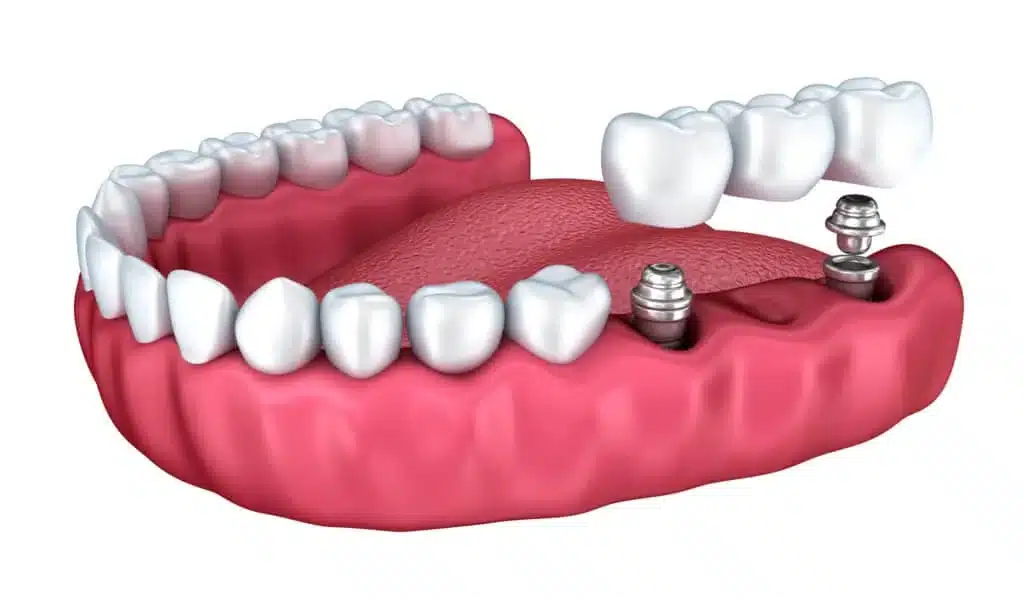
A dental bridge is a fixed restoration that closes a gap by attaching to the teeth on either side of it, known as the abutment teeth.
The missing tooth is replaced with a pontic, which can be made from a range of materials.
Bridges work when one or more teeth are missing and the neighboring teeth are strong enough to act as anchors.
Types of dental bridges
There are several types of dental bridges, used depending on your situation and the condition of your teeth. The most common types are:
1. Conventional bridge
The conventional bridge is the most common type. It’s made up of one or more pontics attached to crowns. The crowns are anchored on the neighboring teeth, which need to be prepared first. This type works well when the neighboring teeth are healthy and stable enough to serve as support.
2. Adhesive bridge (Maryland bridge)
With an adhesive bridge, also called a Maryland bridge, the pontic is held in place by wings bonded to the back of the neighboring teeth. This option is minimally invasive, since the neighboring teeth don’t need to be ground down. It works particularly well for small gaps and is a popular, aesthetic option in the front of the mouth.
3. Cantilever bridge
A cantilever bridge is used when the last molar in a row is missing, leaving only one abutment tooth available. This type is anchored on just one side, which does put more stress on that tooth. Cantilever bridges are often used when an implant isn’t possible or preferred.
4. Implant-supported bridge
An implant-supported bridge uses implants instead of natural teeth as the anchors. This option comes into play when several teeth in a row are missing, or when the neighboring teeth aren’t stable enough to act as support. Implant-supported bridges are a durable, long-term solution, but they require surgery to place the implants and a multi-month healing period, similar to a single dental implant.
How treatment works
Making and fitting a dental bridge happens in several stages and typically takes a few dental appointments:
1. Initial exam and planning
First, you’ll get a thorough exam to assess your dental health. The dentist checks whether the neighboring teeth are strong enough to serve as abutments, and figures out which type of bridge suits your situation best. X-rays or impressions may be needed to get a full picture of your teeth.
2. Preparing the abutment teeth
For a conventional bridge, the neighboring teeth need to be prepared by being ground down to hold the crowns. This is done under local anesthesia, so you won’t feel pain. With an adhesive bridge, this step is much less invasive, since the teeth don’t need to be reduced.
3. Taking an impression and a temporary restoration
Once your teeth are prepped, an impression is taken. This impression is used as the basis for making the bridge in the dental lab. While the final bridge is being made, you’ll typically get a temporary restoration to close the gap and protect your teeth in the meantime.
4. Try-in and adjustments
Once the bridge is ready, it’s tried in first to check the fit, look, and bite. If needed, the dentist makes adjustments so the bridge sits perfectly.
5. Fitting the bridge
Once everything fits properly, the bridge is permanently cemented onto the abutment teeth or implants. The dentist does a final check of your bite and the bridge’s function to make sure everything’s right.
With a conventional or adhesive bridge, there’s often only a few days between the impression and the fitting, so plan on roughly a week between your first and last appointment.
Benefits of dental bridges
Dental bridges offer a lot of advantages, both functional and cosmetic:
- Closes the gap: A dental bridge fills the space left by a missing tooth, restoring both your bite and the look of your smile.
- Improves speech: Missing teeth can affect how you talk. A bridge helps fix that.
- Prevents teeth from shifting: If a gap is left unfilled, neighboring teeth tend to drift into the space over time, which can throw off your bite and jaw function. A bridge keeps neighboring teeth in place.
- Stable solution: Dental bridges are firmly anchored in the mouth and feel natural when speaking and chewing.
Drawbacks of dental bridges
Despite the advantages, there are a few downsides worth thinking through:
- Reducing the abutment teeth: With conventional bridges, the neighboring teeth need to be ground down, which means losing some healthy tooth structure.
- More stress on the abutment teeth: The abutment teeth carry the full load of the bridge, which can make them more prone to decay or damage if oral hygiene isn’t kept up.
- Cost: Dental bridges are often pricier than removable dentures, especially implant-supported bridges. That can be a major factor when choosing between treatments.
- Lifespan: While dental bridges are durable, they usually don’t last a lifetime. You may need to replace or repair one after some years.

What does a dental bridge cost?
The cost of a dental bridge varies a lot depending on the type, the materials used, and how much work your case needs.
Back home, a standard three-unit bridge typically runs $2,500 to $5,000 in the US, and A$3,000 to A$5,000 in Australia, while implant-supported bridges can cost significantly more. In the UK, the NHS charges a flat £332.10 for a bridge of any size if it’s clinically necessary, while private treatment runs £800 for a simple Maryland bridge up to £4,500 or more for a three-unit bridge, depending on material and location.
Price comparison: dental bridges in Bangkok vs. the US, UK, and Australia
One important difference upfront: in the UK, the NHS flat fee makes a bridge relatively affordable if you qualify, so this comparison matters most if you’re paying privately, want higher-end materials, or don’t have coverage that applies. For a rough sense of the numbers (as of August 2026, currency conversions approximate):
| Type of bridge | United States | United Kingdom | Australia | Bangkok |
|---|---|---|---|---|
| Adhesive bridge (Maryland) | lower end of a standard bridge, roughly $1,500 to $2,500 | £800 to £1,800 private | roughly A$1,500 to A$2,500 | 25,000 to 35,000 THB (about $725 to $1,015) |
| Conventional bridge (ceramic/porcelain), total price | $2,500 to $5,000 | £332.10 on the NHS if eligible, £2,000 to £6,000 private depending on units and location | A$3,000 to A$5,000 | 53,000 to 106,000 THB (about $1,535 to $3,075) |
| Implant-supported bridge | often $5,000 and up, varies widely by case | several thousand pounds and up, varies widely by case | often A$6,000 and up, varies widely by case | from about 51,000 THB (about $1,480), total price depends heavily on scope |
These are rough benchmarks from publicly available pricing, not firm quotes. The actual price depends on your individual case, the number of teeth being replaced, and the clinic, and is only confirmed after an in-person exam.
Well-known clinics for dental bridges in Bangkok
Bangkok International Dental Center (BIDC) is JCI-accredited and has its own digitized dental lab, which allows for quick turnaround times on bridges in particular.
Thantakit Dental Center specializes in international patients and offers both conventional and implant-supported bridges.
Bangkok Smile Dental Clinic works well for simpler cases like an adhesive bridge, with a central location near Lumpini Park.
These mentions are for general information only and aren’t a medical recommendation, they don’t replace an individual consultation or your own comparison of several clinics. Bangkok Insiders has no commercial relationship with the clinics named, unless stated otherwise.
Practical tips for your dental bridge treatment in Bangkok
For a conventional or adhesive bridge, plan on at least a week in Bangkok, for the initial exam, the impression, and the final fitting, with plenty of normal sightseeing time in between while you wear the temporary. If you go with an implant-supported bridge, the same logic applies as with a single dental implant: expect two separate trips because of the multi-month healing period. Also ask in advance what material will be used and whether the bridge comes with a written warranty, that’s especially useful for treatment abroad in case an adjustment is needed later.
The bottom line: dental bridges as a tooth-replacement option in Bangkok
Dental bridges are an effective, good-looking way to close a gap and restore the function of your bite.
They offer real advantages, like stabilizing the neighboring teeth and improving both chewing and speech.
There are several types of bridges to choose from depending on your specific dental situation. In Bangkok, conventional and adhesive bridges in particular can often be finished within a few days, making them easy to work into a longer trip.
Despite the cost and possible downsides, like grinding down the abutment teeth, a bridge is a sensible, long-term investment in your dental health. Get an in-person exam before deciding, and get a second opinion if you’re unsure.
FAQs about dental bridges in Bangkok
Here are answers to some of the questions we get asked most often about dental bridges in Bangkok.
What is a dental bridge and what is it used for?
A dental bridge is a fixed restoration used to close a gap left by one or more missing teeth. It’s made up of artificial teeth (pontics) attached to the neighboring natural teeth or implants.
What types of dental bridges are there?
There are several types of dental bridges, including:
– Conventional bridge: Attached to crowns on the neighboring teeth.
– Adhesive bridge (Maryland bridge): Held in place with wings on the neighboring teeth, without grinding them down.
– Cantilever bridge: Anchored on just one abutment tooth when the last tooth in a row is missing.
– Implant-supported bridge: Anchored on dental implants and used to replace several missing teeth.
How long does a dental bridge last?
With good care, a dental bridge can last 10 to 15 years or even longer. Lifespan depends on oral hygiene, regular dental visits, and how well the abutment teeth are maintained. Regular checkups are important to keep both the bridge and the abutment teeth healthy.
Do the neighboring teeth need to be ground down for a bridge?
Yes, for a conventional bridge, the neighboring teeth that act as abutments need to be ground down and fitted with crowns. This preparation is necessary to anchor the bridge securely. With an adhesive bridge, no grinding is required.
How is a dental bridge fitted?
The dentist prepares the neighboring teeth, takes an impression, and creates a model of your bite. That model is used to make the bridge in a dental lab. Once the bridge is ready, it’s fitted at a follow-up appointment and permanently bonded or cemented to the abutment teeth. In Bangkok, there’s often only a few days between these appointments for conventional and adhesive bridges.
What does a dental bridge cost in Bangkok?
An adhesive bridge usually costs 25,000 to 35,000 THB (roughly $725 to $1,015 / £555 to £778 / A$1,085 to A$1,520). A conventional ceramic or porcelain bridge typically runs 53,000 to 106,000 THB (roughly $1,535 to $3,075 / £1,180 to £2,355 / A$2,305 to A$4,610) total. Implant-supported bridges start around 51,000 THB and can go significantly higher depending on scope. For comparison, a standard three-unit bridge typically costs $2,500 to $5,000 in the US, A$3,000 to A$5,000 in Australia, and £332.10 on the NHS if you qualify (or up to £4,500+ privately) in the UK. You’ll only get a firm quote after an in-person exam.
What are the benefits of a dental bridge?
A dental bridge closes gaps, restores your bite, and improves the look of your smile. It also prevents neighboring teeth from drifting into the gap, which can otherwise throw off your bite and jaw function.
Are there any downsides to dental bridges?
One downside is that the neighboring teeth need to be ground down, which means losing healthy tooth structure. The abutment teeth also carry extra load, making them more prone to decay or damage. Bridges may also need to be replaced after some years.
How do you care for a dental bridge?
A dental bridge should be cared for just like your natural teeth: regular brushing, flossing or interdental brushes to clean between teeth, and regular dental checkups. Good oral hygiene is key to extending the bridge’s lifespan and keeping the abutment teeth healthy.
Can you eat normally with a dental bridge?
Yes, a dental bridge fully restores your bite, so you can eat nearly anything. That said, be cautious with very hard or sticky foods to avoid damaging the bridge or the abutment teeth. If you’re unsure what’s safe to eat, ask your dentist.
How many days should I plan for a dental bridge in Bangkok?
For a conventional or adhesive bridge, about a week is usually enough, since Bangkok dental labs typically turn work around within a few days. For an implant-supported bridge, plan on two separate trips spread over several months, because of the implant’s required healing period.
Note: This article is for general information only and doesn’t replace a personal dental consultation or exam. The clinics mentioned are named for general information, not as a medical recommendation, and Bangkok Insiders has no commercial relationship with them unless stated otherwise. Prices, procedures, and accreditations can change, so confirm everything directly with the clinic before any treatment, and consider getting a second professional opinion if needed.

- About the Author
- Latest Posts

Tim Kroeger is a luxury wellness travel specialist, founder of Universal Traveller, and creator of The Restorative Index, a performance-based framework for evaluating wellness hotels. After 15+ years across 110+ countries, he shifted from destination-chasing to travel recovery. Based in Bangkok, he reviews luxury wellness hotels and spas on tim-kroeger.com through a performance lens, combining firsthand testing with expert insights.